A large part of my business is the Matching Game. This consists of analyzing business needs, consulting with the people involved, and matching to the appropriate technology solution. This post begins there and explores some architectural approaches in the delivery of technology solutions.
The Basics
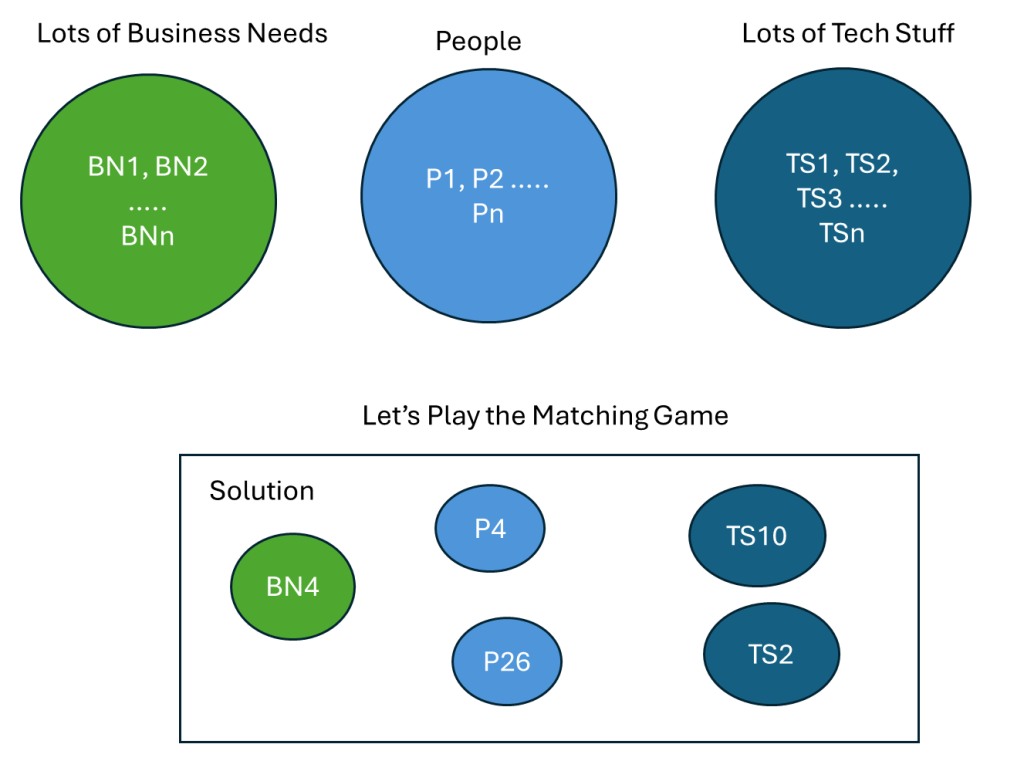
Architectural Approaches
If we have established that an AI Agent is the best solution for part of the business need then we may end up with a solution like:
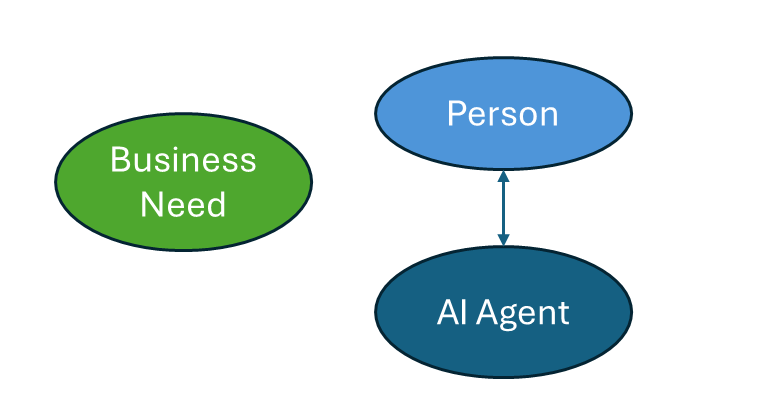
In this example, note the collaborative nature of the Person and the AI Agent in delivering a solution to the business need. This will be a common pattern in many scenarios, either an ongoing collaboration or an escalation to a person when required.
We may also have a scenario with a suite of AI Agents collaborating to handle the business need with a Person involved as necessary, we might even say that the person is managing the Agents in this scenario:
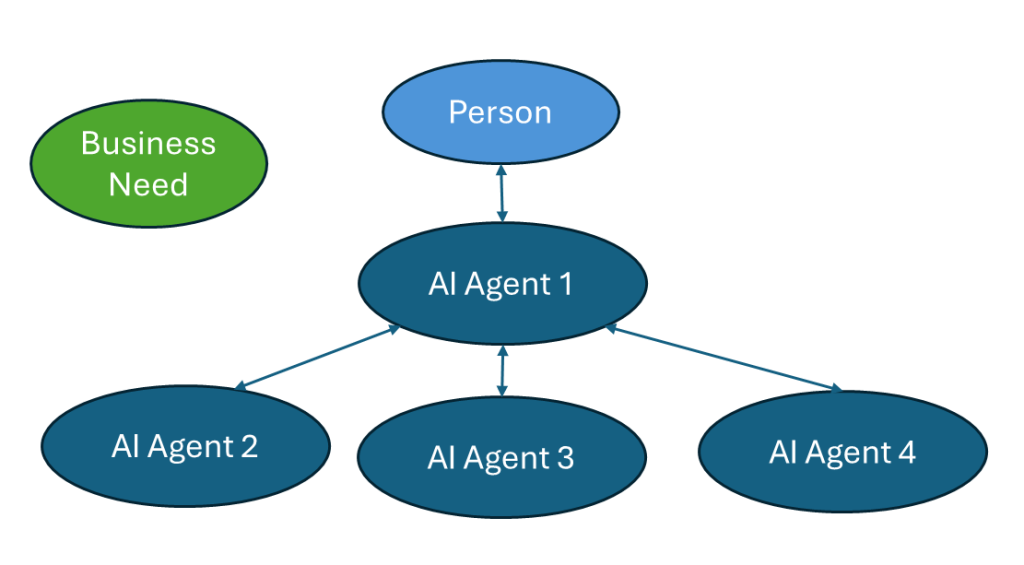
As shown above AI Agent 1 is orchestrating the collaboration among the agents. Each Agent is specialized to handle a particular function that covers part of the business need. This is a Multi-Agent architecture.
But let’s be careful out there, we must always be looking for the best solution for the business need, we should not jump on the AI bandwagon unless that truly is the best solution. How do we define best? Well that’s a key part of what we do when working with a client to define the business need and identify potential solutions.
So the best solution may be one of all classic (non-AI) components. Or a hybrid technology approach:
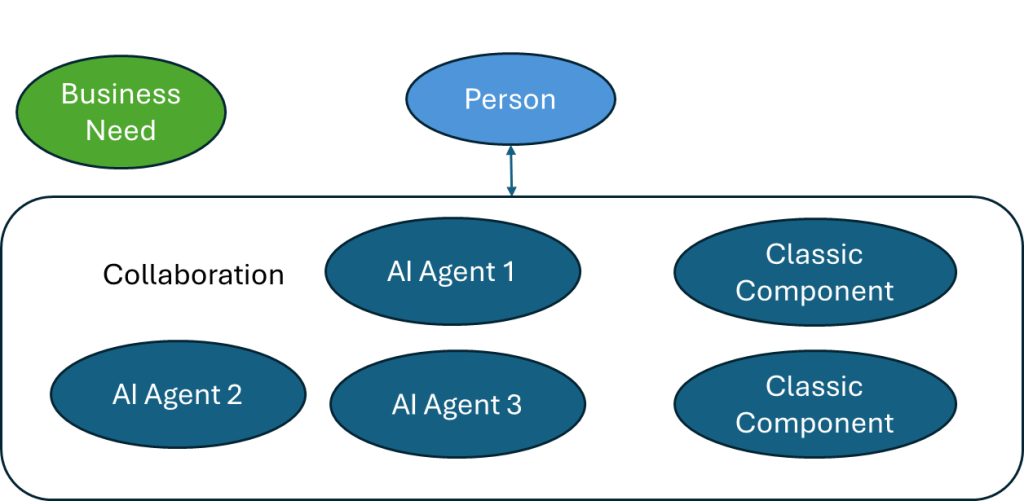
Here we have a suite of components (services) that collaborate to deliver value. Each of these components has specific responsibilities and specialization. Each component can use whatever approach and technology is most appropriate in fulfilling its responsibilities. For those familiar with a Microservices architecture this must sound very familiar.
More on Architecture
We briefly illustrated a Multi-Agent solution and a hybrid, Microservices, solution involving Agents and other Components. Architecturally it is important to draw upon the design principles and lessons learned from Microservices, applying those insights to Multi-Agent architectures where relevant. Simultaneously, the unique aspects of Multi-Agent architecture should be recognized and thoughtfully integrated into the design process.
A post covering this topic will be available shortly – stay tuned!